Nigeria Newspaper - Latest Nigeria News paper: Search results for coronavirus outbreak
Showing posts sorted by relevance for query coronavirus outbreak. Sort by date Show all posts

8.4.20

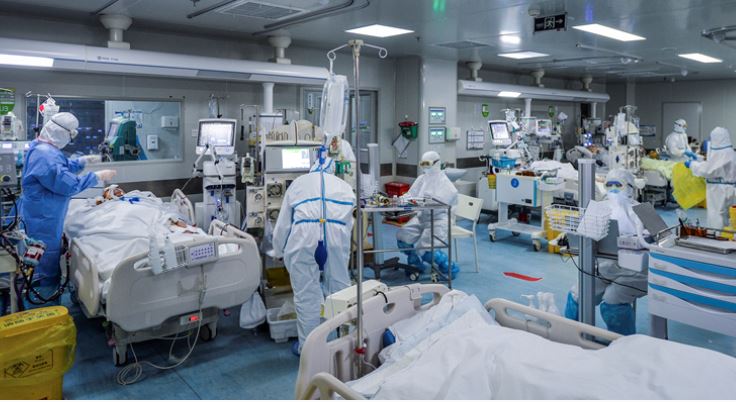
Photos from Wuhan, the epicenter of the Coronavirus outbreak

By With No comments:
Photos from Wuhan, the epicenter of the Coronavirus outbreak
Wuhan, the epicenter of the Coronavirus pandemic, was placed on a major lockdown for more than 10 weeks to contain the outbreak. The lockdown was finally lifted on Wednesday.

The city of 11 million people was shut off on January 23, with no one allowed to enter or leave. Most of the nearly 82,000 confirmed infections and 3,331 deaths in China have been in Wuhan.

However, as the virus has been brought under control in Wuhan, China, the lockdown was lifted.

Photos taken on Wednesday, April 8, show people leaving their homes, all wearing masks, some clad in the white full-body protective suits.

A lot of people can also be seen traveling as they've finally been allowed to reunite with families and go back to their jobs.
Photos from Wuhan, the epicenter of the Coronavirus outbreak

An estimated 55,000 are set to leave Wuhan by rail on Wednesday, officials said, with about 21,000 leaving via Hankou, the city's oldest railway station a stone's throw away from the Huanan Seafood Market, an early focal point of infections.

Just past 6am, scores had already been patiently waiting to board the first train out of Wuhan - a high speed rail to Jingzhou, about 200km away.

Many were holding gift packs which had been given out by station management, who had arranged for staff to stand at the platform holding up red signs that read "Hankou Station welcomes you".
Photos from Wuhan, the epicenter of the Coronavirus outbreak

"I'm just very happy that we can finally leave, it's been too long," said a man who gave his name only as Mr Zheng, Strait Times reports.

The airport was a hive of activity. The first flight was at 7.25am that flew to Hainan’s Sanya with 49 people on board.
Photos from Wuhan, the epicenter of the Coronavirus outbreak

By about 9am, hundreds had streamed to the airport where a positive health code is required for entry.

Travellers had to show the same code before they were allowed to approach the check-in counter, and once more at the boarding gate.

Airport officials said 96 flights are expected to take off from Wuhan on Wednesday alone, with 11,855 travellers expected to come through the airport.

The Strait Times China correspondent, Elizabeth Law was at Wuhan early today to capture Wuhan after the lockdown was lifted.

She revealed that people have not lowered their guards despite that fact that the virus appears to be under control.

There are usually at least 3 layers of security checks in public places; involving temperature checks, disinfectant spray, and people are constantly reminded to stay at least 1.5m apart.
Photos from Wuhan, the epicenter of the Coronavirus outbreak

Photos from Wuhan, the epicenter of the Coronavirus outbreak
 Read her tweets below.
Photos from Wuhan, the epicenter of the Coronavirus outbreak


Photos from Wuhan, the epicenter of the Coronavirus outbreak

Photos from Wuhan, the epicenter of the Coronavirus outbreak

31.1.20

Coronavirus: Senate advocates self-isolation for travellers from China, others

By With No comments:
Coronavirus: Senate advocates self-isolation for travellers from China, othersThe Senate has called on the Federal Ministry of Aviation to immediately take steps to ensure all persons arriving from China, especially Chinese citizens from Nigeria that travelled for the Chinese Lunar New Year festivities, self-isolate by staying indoors in their homes for at least two weeks before mixing with Nigerian public.
It also extended the call for self-isolation to travellers from other countries that are on record to be affected by outbreak of the deadly disease.
The Senate, accordingly, advised the Nigerian public desirous of traveling  to Asia to put all arrangements on hold until the Coronavirus outbreak is eliminated.
These formed part of resolutions reached sequel to the consideration of a motion titled: “Coronavirus Outbreak and Preventive Response Towards Stemming it’s Spread in Nigeria.”
Sponsored by Senator Chukwuka Utazi (PDP, Enugu North), the lawmaker in his presentation explained that the virus is spread through the air by coughing or sneezing, close personal contact, touching a contaminated object or surface, and rarely by fecal contamination.
Utazi recalled that in response to the outbreak of the killer virus, “China put millions of people in three of its cities on lockdown in an effort to contain a Coronavirus outbreak that has killed one hundred and seventy and infected more than six hundred and thirty persons.”
The lawmaker, while highlighting efforts made by Nigerian authorities in preventing a possible outbreak of the virus, disclosed that the Federal Ministry of Health through the Nigeria Centre for Disease Control (NCDC) has risen to the occasion by monitoring the outbreak of respiratory illness caused by the novel (new) Coronavirus.
He added that the Aviation regulatory agencies recently stepped up surveillance across operating airlines and International airports nationwide, as well as issued a travel advisory in a bid to contain any case of the Coronavirus pandemic.
Senator Jibrin Barau (APC, Kano North), in his contribution, described the motion as a wake-up call for health officials across the country to deploy early preventive measures.
He said, “I was thinking whether our health officials are doing everything possible to prevent the coming of this disease into the country.
“This motion is a wake-up call to our health officials to deploy preventive measures.”
“We should find a way to send a message through this motion to make sure the proper thing is done to a safeguard the health of citizens and the nation,” the lawmaker advised.
Senator James Manager (APC, Delta South), said according to records, China is the biggest and most populated country in the world.
The lawmaker raised alarm that Nigeria and other countries are at risk of experiencing an outbreak given what he described as the uncontrolled influx of Chinese nationals from one country to another.
Senator Manager, who likened the Coronavirus to the deadly Ebola virus, urged Nigerian authorities to rise to the occasion, warning that “almost all powerful countries in the world are already affected.”
The Senate in its resolutions, accordingly, urged Nigerians with any reported cases of likely infection or with symptoms approximate to those associated with Coronavirus to visit hospitals for urgent health check.

2.3.20

How coronavirus outbreak threatens Nigeria’s economy

By With No comments:
How coronavirus outbreak threatens Nigeria’s economyThe cost of the coronavirus outbreak for businesses is rising as the organised private sector explores measures to reduce the impact on the struggling local economy.
Although cargoes are still received from China and other European countries, there is the fear about the sustainability of business operations that require the movement of personnel for maintenance of plants and machinery as well as the disruptions in the supply chain.
Already, oil prices which are the mainstay of the country, are trading below the Federal Government’s benchmark for the 2020 budget, thus posing a threat to the budget which was signed by President Muhammadu Buhari in December, on the assumption of oil production of 2.18 million barrels per day with the price benchmark of $57 per barrel.
Similarly, Nigeria’s latest Excess Crude Account balance, according to a statement from the Office of the Accountant General of the Federation, was put at $71.81m, while movement in reserves showed that the country’s reserves stood at $36.37 billion at the weekend, down by $2.16 billion from $38.53 billion in which it opened the year.
With an earlier projection by Citigroup that Brent Crude might slide to as low as $47 a barrel in the wake of the coronavirus that is yet to be contained, there are concerns about the economy’s buffer package.
Oil prices are expected to tank further having dropped to $49.67 on Friday.
The Federal Government has been exploring various means of generating revenue to buffer the effect of unstable oil prices through increment in VAT and review of extant legislation, among others.
For China, a trade war with the United States has left its economy expanding at the slowest pace in 30 years, as economists estimated that four million jobs might have been lost in 2019.
With the outbreak of the coronavirus, which has killed many and has infected thousands more, a plunge in Chinese factory output in February is expected as quarantine efforts to contain the disease disrupted supply chains – with damaging consequences for companies around the world.
The outbreak of the coronavirus is estimated to be costing the shipping industry $350 million weekly in lost revenues, according to the International Chamber of Shipping (ICS).
The ICS estimates that more than 350,000 boxes have been removed from global trade as a result of the outbreak. Global supply chains continue to suffer, and issues remain around the quarantining of ships at ports, crew changes, and ensuring the health of seafarers and passengers.
Having built an inventory over time, there have been no concerns or data from Nigerian manufacturers, except for the fear of machine maintenance if a breakdown occurs.
According to the Director-General of the Lagos Chamber of Commerce and Industry, Dr. Muda Yusuf, the performance of key sectors that have the capacity to facilitate economic diversification is still largely constrained.
“The assessment of realities in the macroeconomic environment suggests that the economy is yet to recover from the 2016 recession. Growth is still sluggish and weak to create employment opportunities for the fast-growing population and lift millions of Nigerians out of poverty. There is the need for government to embrace the structural, policy and regulatory reforms to unlock the huge growth potential in the economy,” he added.
For the insurance sector, the Chairman, Nigerian Insurers Association (NIA) Tope Smart, said that many insurance policies might pay out as quite a few policies also have deliberate exclusions for epidemics and pandemics.
To Smart, it was too early to say how much the virus outbreak will cost the insurance industry. According to him, travel insurance claims are expected to spike, as flights and trips get cancelled in the wake of the disease, while companies whose operations get interrupted and events get cancelled will turn to insurance to absorb the financial blow.
Similarly, over $100 million worth of hardware goods belonging to some of Nigeria’s phone and computer vendors are currently stuck in China, The Guardian has learnt.
It was learnt that some Nigerian vendors who travelled to China for the Chinese festival shopping season in late January are unable to do business or return to the country due to the outbreak of COVID-19.
Confirming this development, the President of Phones and Allied Dealers Products Association (PAPDAN), Ifeanyi Akubue, said huge stocks, especially phones and computers were stuck in China.
Akubue, who spoke with The Guardian, said the coronavirus’ impact was huge on the Nigerian market, as major Original Equipment Manufacturers (OEMs) supplying this market are based in China, and have not supplied products since the outbreak of the virus.
“I can confirm to you that over $100 million worth of goods is currently stuck in China. Most of the OEMs have stopped production. Ours stocks are currently depleting. It is a sad situation. The world is confused. We can only pray and take caution,” he stated.
He appealed to the Federal Government to help ensure that the nation’s borders, especially the airports, are not porous.
“I think airport scrutiny should be taken more seriously. We can’t afford to face the epidemic as a country. You can imagine the number of deaths in China, and other countries. We need, as a country, to take more precautionary measures.”
Speaking more on the impact on the local market, the President, Computer and Allied Products Dealers Association of Nigeria (CAPDAN), Adeniyi Ojikutu, said if the situation persisted, prices of products would definitely rise.
According to him, “the situation has become worrisome because both goods and people are stuck in China. The CoVID-19 must be tackled as fast as possible before it crumbles both businesses and humans.”
One of the vendors, who simply gave his name as Chukwu Alphonso, said he had been expecting his orders to return to Nigeria since early January. “Both goods and my officers sent are stuck in China.”
Alphonso said if the situation failed to abate by the end of the first quarter, “prices of mobile phones, computers, chips would rise by as much as 75 per cent. And that portends something bad for the market.”
The Public Relations Officer of CAPDAN, Olaifa Ademola, said the situation had been pathetic. He lamented that vendors couldn’t get orders any more and old stocks are fast depleting as products are stuck in China.
“My advice is that people should take caution. The virus is real, and no solution in sight. We are currently selling old stocks. I don’t know what will happen if we finish the old stocks and the virus remains.”
According to him, high-end brands such as Apple, Samsung are not really affected because some come from Europe and America, “but brands that are directly linked to China, the likes of Tecno, Infinix, Gionee are feeling the impact, and soon, I can say the prices will go up. So, I will say the problem is real. People should take caution.”
The Head, Corporate Communications, Zinox Technologies, Gideon Ayogu, explained that though the outbreak had impacted the production and shipment of components and hardware, production planning and forecasting had helped the company.
Responding to The Guardian inquiries on the matter with regard to possible impact in Nigeria, the Director-General, Delta State Innovation Hub (DSHub), Chris Uwaje, said: “I advise the entire ICT industry ecosystem, and especially the fintech players in the banking and finance sector, to ensure that their best skilled IT manpower (both software and hardware) are specially protected and constantly counseled about coronavirus.
“This is important because if they go down, they will be very difficult to replace at short notice. Remember that the 34 years old Chinese medical doctor - a vital skill resource - who discovered and ‘whistle-blew’ the incident is dead. Coronavirus can deliver a critical blow to the ICT performance sector,” Uwaje stressed.
The Nigerian Ports Authority (NPA) said the nation still received cargoes from China, adding that the system was enforcing strict preventive measures against the coronavirus.
The General Manager, Corporate and Strategic Communication of NPA, Adams Jatto, told The Guardian: “We still receive ships from China, but the vessels are not coming directly from China, they call at various ports before coming to Nigeria and they must have undergone different screenings before arriving at Nigerian ports. When they come here, we also do our own screening to ensure that the crew and cargoes are free from coronavirus.
“We are liaising with the Port Health Service. We are also getting some precautionary facilities to ensure that we provide safety for all the workers. Dockworkers who are boarding the ships are well protected.
“In any case of suspecting coronavirus, such a vessel is flagged, and we immediately ensure that the involved persons are handed over to the state health centre. We already have a standby ambulance to take care of that. So, we are liaising with the health officials and the state government,” he stated.
The Guardian learnt that vessels calls to China are becoming less frequent, as fear of the coronavirus and a slowdown in the Chinese economy have deterred cruise liners, container ships, oil tankers and bulk carriers alike from stopping at the country’s harbours.
Commercial vessels have stopped calling, with port calls falling by an estimated 30 per cent in February, and container throughput estimated to decline by between 20 and 30 per cent, according to Clarksons – a shipping research company.
Seven of the world’s 10 largest container ports are in China, including Hong Kong.
Many of the world’s largest container shipping lines, including the Mediterranean Shipping Company (MSC), AP Moller Maersk, CMA-CGM and Hong Kong’s own OOCL, have all cancelled their cargo routes from Asia to Europe and North America in recent weeks.
The development also has an effect on the Nigerian ports system with fewer vessels coming into the ports from the Asian country.
Sources at Lagos ports confirmed to The Guardian that the level of imports arriving in Nigeria was nose-diving, as cargo import from China has dropped significantly.
The Secretary, Foreign Trade and Investment Committee, Automobile Spare Parts and Machinery Dealers Association (ASPAMDA), Sir Leo Okoye, said the effect of the coronavirus was devastating to the markets.


According to him, “is an international market that we operate in, the outbreak of the virus has affected our business drastically. Foreigners are no more coming in for business. The virus has caused hikes in the sales of auto parts as some of the parts have tripled in price because there is no supply. “The goods that came before the outbreak of the virus are already getting out of stock. An auto mechanic event coming up this month was cancelled because of the outbreak.”
On alternative markets to purchase spare parts, he said: “I don’t think there will be alternatives because the Chinese are indoors, they are no more producing.
“We are not receiving goods again, the last consignment we received will soon be out of stock and after then, we won’t be selling again. This coronavirus is a threat to our businesses,” he added.
The Assistant Public Relations Officer, Ladipo International Market, Ezekiel Ezekwo, said: “It has affected our sales because our people are not traveling to China again.
“Nobody can import, nobody can send money to load the container for now. Some of our members usually travel every month but can no longer do so. The business is dull now, people don’t want to travel because they don’t know where they can contact the virus”.

7.3.20

How Italians, Travellers 'Infected' Nigeria, 17 Other Countries With Coronavirus

By With No comments:
Nigeria had been spared for 57 days when the outbreak of the novel coronavirus disease, also called COVID-19, was first recorded in Wuhan, China on December 31, 2019.

Even as the disease ravaged China and Asian countries such as Hong Kong and Singapore, as well as America and Europe, infecting thousands of people, Africa’s most populous country was a mere spectator.


But the story changed for Nigeria on February 27, 2020 when a 44-year-old Italian businessman who arrived in Lagos from Milan, Italy tested positive for the coronavirus.

The Italian, a consultant for Lafarge Africa Plc, was among 149 passengers aboard a Turkish Airlines flight which arrived at the Murtala Muhammed International Airport on February 25.

He reportedly lodged at a hotel in Lagos that night and left the following morning for a business meeting at the Lafarge’s factory in Ewekoro, Ogun State.

According to the Lagos State Commissioner for Health, Prof Akin Abayomi, the patient started to develop symptoms of high fever and body pains on February 26 and was transferred to the Lagos State Biosecurity Facilities for isolation and testing.

The Italian was tested positive for COVID-19 at the Virology Laboratory of the Lagos University Teaching Hospital, part of the Laboratory Network of the Nigeria Centre for Disease Control.

He has since been in quarantine at the Infectious Disease Centre at Yaba, Lagos, and health authorities said he was now clinically stable.

The commissioner later said the Lagos and Ogun state governments were tracing the patient’s 148 co-passengers, adding that another 39 persons the victim made contact with at the Lafarge’s Ewekoro plant were quarantined.

By Friday, the Ogun State Commissioner for Health, Dr Tomi Coker, said the 39 persons on quarantine had not developed any symptoms of COVID-19.

Coker said this while leading a team to the Redemption Camp of the Redeemed Christian Church of God along the Lagos-Ibadan Expressway.

Also, Abayomi, at a briefing on Thursday said the Italian was responding to treatment and would be released when he would no longer be a threat to other members of society.

Abayomi said, “The Italian has been with us for one week now; his clinical situation is quite stable, the symptoms are dramatically resolving; so, we are expectant that we will continue to make this kind of progress.

“Sometime over the weekend, he developed a respiratory symptom, and we initiated some therapy in the form of anti-viral, which are not curative, but just to make it easier for his immune system to fight the infection. He seems to have responded to that; so we are keeping him on that and there are no side effects.”


However, the commissioner said the patient was suffering from depression as he was the only person in the ward and had few visitors because his family was not in Nigeria.

The commissioner added that 146 of the patient’s co-passengers had been identified except for two passengers onboard the Turkish Airlines who were still missing.

As of Friday, over 101,000 coronavirus cases have been recorded, with over 3,400 deaths. Around 56,000 patients have, however, recovered. China is the most hit country with more than 80,000 cases.

COVID-19 has now affected 95 countries and territories around the world and one international conveyance – the Diamond Princess cruise ship harboured in Yokohama, Japan.

Already, governments, pharmaceutical companies and scientists are racing to find a vaccine for the disease.

The Italian connection

Meanwhile, Nigeria was the first country in sub-Saharan Africa to record a coronavirus case, and when it did, findings showed that it joined the league of about 17 countries which, surprisingly, did not import the disease from China-related travels, but from Italy, the hotspot of the outbreak in Europe.

Italy is the fourth most hit country by COVID-19, with over 4,600 cases as of Friday, after China, South Korea and Iran. Italy also recorded total deaths of 49 on Friday alone, totalling 197 deaths so far. About 778 new cases were also newly recorded on Friday.

Apart from Nigeria, other countries where infection cases seem to be all related to Italian citizens or travels are Mexico, Wales, Northern Ireland, France, Croatia, Switzerland, Algeria, Spain, Brazil, Greece, Finland, North Macedonia, Germany, Romania, Denmark, Lithuania, and the United Arab Emirates.

An Italian online newspaper, open.online, stated that almost all recent cases of contagion in Europe and beyond came from Italy.

For example, on February 28, the Mexican Ministry of Health confirmed that its first case of coronavirus was a 34-year-old man who returned from northern Italy a few days before.

Also, the first infection in Northern Ireland and Wales in the United Kingdom were both on people from northern Italy.

In Croatia, the first coronavirus case concerned a young man who stayed in Milan, Italy in mid-February.

The first case recorded in Switzerland on February 25 was a 70-year-old man who had recently travelled to the Milanese area in Italy.

When Algeria also recorded its first case on February 25, it was on an Italian citizen who arrived in the country eight days earlier.


In Spain where eight people first tested positive under 36 hours, they were all Italian citizens and travellers.

The first patient in Brazil was also a man who had returned from Italy after a business trip on February 21.

When Greece announced its first case of coronavirus, it was a woman who had recently travelled to northern Italy.

Finland’s first case was a Chinese tourist from Wuhan, the epicentre of the coronavirus, but its second case was a woman who had travelled to northern Italy.

In North Macedonia, the first case of coronavirus positivity was a Macedonian woman who had returned from Italy after a long stay.

One of Germany’s first cases was a man who had also returned from Italy.

In Romania, the first case of coronavirus recorded on February 27 was a 20-year-old who worked in an Italian-owned restaurant. The restaurateur was later quarantined in his home together with his seven family members.

Likewise, in Denmark, the first case was a man who had returned from Italy with his family on February 24 after spending a holiday in a ski resort in Lombardy, an area in northern Italy.

The UAE’s first coronavirus cases were two Italians who were staff members of the UAE Tour, a road cycling stage race.

Similarly, Lithuania’s first recorded case was a woman who returned from Verona, northern Italy on February 24.

In Nice, France, the first case of coronavirus was a woman who had returned from Milan, Italy.

An Italian Catholic professor and member of the World Health Organisations Executive Council, Walter Ricciardi, blamed the outbreak in Italy on the government’s unpreparedness.

“We pay for the fact that we did not immediately quarantine the landers from China,” open.online quoted Ricciardi as saying.

The don said, “We closed the flights, a decision that has no scientific basis, and this did not allow us to trace the arrivals, because at that point we were able to stop and arrive from other places.”

Ricciardi added that one of the reasons the coronavirus had affected the country greatly was because the “appropriate practices have not been put in place, in addition to the fact that the virus is very contagious.”

Meanwhile, as all confirmed or suspected cases of COVID-19 seem to be from people or travellers from Italy, some countries and multinationals have restricted their citizens and employees from travelling to Italy.

For instance, the United States has raised the alert against Italy to level 3, which means Americans are recommended to reconsider all travel to the country due to the coronavirus emergency. The US issued a similar warning against China and South Korea.


The United Kingdom, Israel, Australia, Hong Kong, Lebanon and others have also issued a similar travel advisory against Italy.

In a similar vein, Malaysia and Singapore have barred entry to travellers from Italy.

Also, organisations such as Apple, British Airways and Harvard have warned their employees against travel to Italy.

However, Nigeria has yet to come up with any travel advisory against Italy, except China, the epicentre of the coronavirus outbreak.

On Friday, the European Union health ministers held emergency talks on the response to the coronavirus outbreak, which has swept through nearly all its 27 member states, with observers saying Europe lacked preparedness to the disease outbreak.

More than two months since first known cases were reported in China, the number of confirmed infections reached more than 5,500 in EU member states on Friday.

Nigeria will approach IMF for share of $50bn funding –FG

In the meantime, the Federal Government on Friday said it would approach the International Monetary Fund to access its share of the $50bn funding for countries hit by coronavirus.

The IMF on Thursday said the coronavirus outbreak had pushed this year’s global economic growth below last year’s levels.

Speaking during a briefing addressed by the Minister of Health, Dr Osagie Ehanire, in Abuja on updates on coronavirus, the Permanent Secretary at the ministry, Abdulahi Mashi, said so far, Nigeria had relied on government and donors’ funding to tackle COVID-19.

Mashi said, “So far, we have relied on domestic funding. The funding announced by the IMF and World Bank is intervention from them but the guideline to access the money is not yet developed.

“We will be getting in touch with them to see how we can access the fund. Donors and partners have met with the Nigeria Centre for Disease Control to see how they can support Nigeria.”


***
Source: The PUNCH

9.3.20

Sinophobia: The Sociological Understanding of Misinformation About The CoronaVirus - John Edoho

By With 3 comments:

Sociological Understanding of Misinformation About The CoronaVirus
The modern society is faced with a lot of events both natural and manmade that undermine social existence. Interestingly, the phases of globalization have significant implication for international wellbeing and by no small measure, the health dimension is becoming even more worrisome. The latter condition has called to question socio-cultural interaction about health and illness behaviour around the world. While there has been a history of a clear globalization of disease as was the case with the Ebola and SARS viruses, the recent epidemiological character of the Corona Virus portends a unique kind of threat to world health. Obviously, the corona virus pandemic of contemporary time is not only an ominous global health challenge but a very crucial sociological problem especially when we consider the adverse impact it now has on social relationship and social life in general. Between the month of December 2019 and early 2020 the outbreak of corona virus has become the current public health emergency of international concern by a declaration of the World Health Organization on 30th January 2020. The ongoing epidemic involves multiple outbreaks of Coronavirus Disease 2019, coded as “COVID-19” (CDC Weekly, 2020). This disease is caused by the severe acute respiratory syndrome coronavirus 2 (SARS-CoV-2 virus) a new disease which is closely related to bat coronaviruses, pangolin coronaviruses (SARS-CoV-1). The ongoing outbreak of COVID-19 was first identified in Wuhan, China (ECDC, 2020).
The position of WHO (2020), is that the spread of the virus to other countries was made possible by the Chinese New Year migration of the early and mid-January 2020. Wuhan city is a transport hub in China as such some individuals who travelled for the China new year holiday celebration on 25 January which initiated “The Year of the Rat” got infected and quickly spread it throughout the country. As of 6th March 2020, More than 89 countries have been affected with prevalent cases in central China, South Korea, Italy and Iran, other countries in no particular other include; Thailand, Japan, Macau, Taiwan, the United States of America, Hong Kong, Singapore, France, Nepal, Vietnam, Australia, Malaysia, Canada, Cambodia, Germany, Finland, Sri Lanka, the United Arab Emirates, India, the Philippines, the United Kingdom, Russia, Sweden, Spain, Belgium, Egypt, Israel, Lebanon, Afghanistan, Bahrain, Kuwait, Iraq, Oman, Algeria, Austria, Brazil, Croatia, Switzerland, Greece, Pakistan, North Macedonia, Georgia, Norway, Romania, Denmark, Estonia, Northern Ireland, San Marino, the Netherlands, Belarus, Lithuania, New Zealand, Mexico, Azerbaijan, Iceland, Monaco, Qatar, Ecuador, Luxembourg, Ireland, Armenia, the Dominican Republic, the Czech Republic, Andorra, Indonesia, Tunisia, Nigeria, etc. Accordingly, Tedros Adhanom, the WHO director praised China's response to the virus as of 24 February in combating to avoid a significant number of cases (National Review, 2020). Yet, as new cases reportedly dropped in China the number of new cases outside China had exceeded the number of new cases in China for the first time on 25 February 2020. BNO News (2020) reports that more than 98,000 cases have been confirmed, of which over 7,100 were classified as serious. Another over 3,000 people have died of the epidemic in China and over 350 have died in other countries, and more than 53,000 people have recovered.

Statement of the problem
There are several interactional situations that define how society functions especially its level of structural interdependence. Thus, the institutional structure of the society and groups have significant bearing on the way society is eventually managed and this is of huge interest to sociologists.  According to Raimi (2020), the world we live in today is fundamentally and structurally diseased in such a manner that we are progressively living in a vampire social world where all known values that sustain the essence of life have been debased, so humans feast on humans for their daily survival. This does not mean literally eating each other’s flesh, it does however reflect a deficit in how we interact and associate. Thus, an empirical understanding of the problem of diseases and illness behaviours and by implication the proper pathway to finding lasting solution demands a sociological diagnosis and treatment alongside the laboratory sciences and technology.
Since the outbreak of coronavirus was visited with unpreparedness, there is currently no vaccine or any antiviral treatment process, though scientific and laboratory research is ongoing. The only recommended preventive measures include hand washing, maintaining distance from people who are sick, and self-isolation for a period of fourteen days if an individual is suspected of being infected (CDC, 2020). Sociologically, this appears to be a well-informed medical opinion of sustaining or saving life, but very much inclusive are events that touch on social symbols and culture amongst others. A medical doctor prescribing medications and patient’s acceptance is more than a health decision but quite often or not, the cultural and religious beliefs and practices do influence medical-decision making and health-seeking behavior. More so, sentiments arise on the broad background of feelings and interests which develop as a result of socio-cultural interactions amongst people of the same group. Sentiments are emotional feeling bound up with some value judgment, misinterpretation of objects and ideal misinformation. The international response to the problem posed by the coronavirus is apt, the travel restrictions, quarantines, and curfews, temperature checks, advisories warning against travel to regions with ongoing community transmission, yet, the Sinophobia stereotype and racism against people of Chinese and East Asian descent as well as rapid spread of misinformation about the virus poses serious policy and academic concerns.

Conceptual clarification
Sinophobia: An Anti-Chinese sentiment (from Latin Sinae "China" and Greek phobos "fear") is a sentiment against the people of East Asia and the Chinese culture. It is targeted at China, especially minorities living in other countries and involves immigration, development of national identity in neighboring countries, majority-minority relations, imperialist legacies, and racism. Its opposite is Sinophilia.
Coronavirus: The name originated on 11 February 2020, as WHO in a press conference established Coronavirus “COVID-19” as the name of the disease caused by Severe acute respiratory syndrome coronavirus 2 (SARS-CoV-2), with first case on 1st December 2019 at Wuhan, Hubei, China.

Theoretical framework
In mainstream sociology, grand theories seek to explain general social problems thus, concerning this study on illness behaviour, we shall consider the theory of structural functionalism. One of the renounced scholars of this theory is a founding father of sociology; Emile Durkheim who proposed division of labour as a process that increases interdependence. Structural functionalism sees the human society as a single interconnected and interdependent social system, each element performs a definite function. Thus, the institution of health, just like the legal, political, economy and family must interact to produce equilibrium. Here, we view the society as an organism which has different parts and the functional integration of the organism as a whole is occasioned by the interdependence of the parts. An abnormality will not bring about growth, so is the social world. Society persist on the principle of functional integration. Thus, failures of certain parts of society will bring about a dysfunction and disequilibrium; society will function in an abnormal way.
Applying this theory to our study, it becomes crystal clear that the ongoing Sinophobia; a form of racism caused by the outbreak of coronavirus is endemic to the survival of the global society. The theory simply posits that for a disease free world we must all play our parts, without ill will, prejudice, and other forms of sentiments. Society will function effectively when all nations are interdependent and come together to seek solution to the outbreak and not to draw back and or make mockery of the people of Asian Descent.

Method
This paper employs the content analysis method. The study relied primarily on secondary sources gathered from news articles, ongoing researches, and information recorded by verified online sources of information. However, it must be noted that a major limitation of this study is that the research is an ongoing epidemic outbreak which restricts the researcher’s participant observation at the time. To its advantage, secondary data does not require access to respondents or subjects (Harris, 2001), making it a less expensive mode of research. An aspect of this paper is to assess the applicability of current literal observation, it is not intended to provide a detailed re-statement of its clinical content but more of conceptual research of existing socio-medical works.

Findings and Discussion
Despite the deliberate political drive to underreport the outcome of the coronavirus, the global scare suggest that the mortality rate is high as every infection brings us closer to losing someone. Our biggest threat is willful ignorance and scaremongers which is worse than the virus itself. It is the place of sociology to explain, interpret and also make predictions in ways that aid better understanding and proper comprehension of events and how these affect the social bond in society.
In Nigeria, on 27 February, the first case was confirmed of an Italian citizen who arrived Lagos from Milan, Italy for a business visit, but later fell ill and was transferred to Lagos State Biosecurity Facility for isolation and testing. The test result was confirmed positive by the Virology Laboratory of the Lagos University Teaching Hospital, a part of the Nigeria Centre for Disease Control. He was transferred to the Infectious Disease Hospital in Yaba, Lagos. Some of the reactions by Nigerian citizens have been that the confirmed case is a scam to make use of the funds set aside by government to combat the disease if it surfaces.
It is important to note that just like every human issue, the coronavirus has generated both a healthy and unhealthy sentiments amongst people. These sentiments are mostly woven by racism, misinformation among others. Below, a brief narrative is provided for each of these identified sentiments.

The Racial Sentiment
The outbreak of Coronavirus Disease 2019 (COVID-19), has led to increased Sinophobia; in forms of extreme prejudice, discrimination, violence, and racism against China, people of East Asian and regions of penetration, many countries in Europe, US and Africa are seeing rising anti-Chinese sentiment. For instance, in Australia, Vrajial (2020) reports two highest circulating newspapers that published provocative headlines. Melbourne's Herald Sun's headline read, "Chinese virus pandamonium", a misspelling of "pandemonium" and alluding to China's native pandas, while Sydney's Daily Telegraph's headline read, "China kids stay home". One of the outcomes of these headlines was a petition of over 51,000 signatures demanding an apology (The National, 2020). Also in Western Australia, AU News (2020) reported an incident at Woolworths’ supermarket in Port Hedland whereby a staff refused entry to customers who appeared to be of Asian descent, claiming it was to prevent the spread of the novel coronavirus. A witness to the incident made a complaint that was upheld by Woolworths who confirmed that the staff was wrong, and apologized for the incident and said they were conducting a full investigation into such discriminate action.
According to Chrysanthos (2020), the Ravenswood School for Girls, Sydney's North Shore ordered a South Korean student to leave her school dormitory even when she had not been to China since visiting Shanghai in October 2019 and was medically cleared when she arrived at the school. Similarly, Bell (2020) reported that a Chinese-Malaysian student in Perth found herself evicted from her shared home upon returning to Australia after visiting her home country for the Lunar New Year. In addition, on Chung (2020) reported that a man collapsed and died of a suspected cardiac arrest outside of a restaurant in Sydney and viral videos circulating on social media suggest that bystanders refused to perform CPR out of fear of the novel coronavirus. In the same vein, Peter Akman, a reporter who works with Canada's CTV News, tweeted an image of his Asian barber in mask and said, "Hopefully all I got today was a haircut” and got himself fired after the tweet was reported (Smith, 2020). Furthermore, Cecco (2020) reported that an online petition was set up, urging schools to ban Chinese students. A board that represents 208 schools in Toronto condemned the petition, saying that it is inciting ethnic racism and bias. In a similar twist, Solhi (2020), highlighted a petition in Malaysia calling for citizens from China to be banned from entering the country on the claim that the "new virus is widely spread throughout the world because of unhygienic lifestyle”, the petition was reportedly signed by a little over 250,000 people within a week.
In Thailand, a restaurant in Chiang Mai displayed a sign which read, "We apologize we are not accepting CHINESE customers. Thank you." after a customer left the restaurant upon noticing a group of Chinese people inside. The police demanded that the sign be taken down, but suggested that it could be rewritten in Chinese as "We ran out of food” (Asia Times, 2020). To add to the list of negative racial reports, CNN (2020), noted that Tottenham Hotspur’s footballer Dele Alli, posted a video on Snapchat where he wore a face mask and appeared to mock an Asian man seated near him in Dubai about the coronavirus outbreak. He later apologized and deleted the video. In Solihull, United Kingdom, a Chinese-origin woman was allegedly called "a dirty Chink" and told "Take your fucking coronavirus back home!". An Indian-origin woman who tried to intervene was beaten up and later hospitalized (Times of India, 2020). To make matters worse, an alleged fake World Health Organization (WHO) flyer in Los Angeles advised people to avoid Asian-American restaurants (BBC News, 2020)
Kurohi (2020), reports that the Ministry of Home Affairs has ordered an investigation against an Islamic teacher named Abdul Halim bin Abdul Karim, who posted on Facebook that coronavirus outbreak was "a retribution by Allah against the Chinese for their oppressive treatment of Muslim Uighurs in Xinjiang." In a separate post, Abdul Halim claimed that Chinese people do not wash properly after defecating and were not as hygienic as Muslims, causing the virus to spread. Home Affairs and Law Minister K. Shanmugam reacted to the comments as "xenophobic" and "thoroughly racist" and is "quite unacceptable from anyone, let alone someone who is supposed to be a religious teacher." The Islamic Religious Council of Singapore is aware of the post, which "expresses views that do not represent the Muslim community" and was investigating the matter. In response, Abdul Halim later said that his Facebook post written in Malay, was not intended to be racist and didn't target "any particular race"
In India, Times Now (2020), drew attention to an Islamic cleric Ilyas Sharafuddin who said in an audio address that coronavirus was a "punishment of Allah on China for mistreating Uighur Muslims". Ilyas said that "the Chinese have threatened the Muslims and tried to destroy lives of 20 million Muslims. Muslims were forced to drink alcohol, their mosques were destroyed and their Holy Book was burned. They thought that no one can challenge them, but Allah the most powerful punished them."

Sentiments based on Misinformation
The sentiments woven around misinformation have a few dimensions and they are discussed under these subheadings:
As eating habits: In the context of eating habits, Gaynor (2020), reported a spread of misinformation which emerged as a result of promoting a video showing a young Chinese woman biting into a bat, falsely suggesting it was shot in Wuhan and the outbreak was due to locals eating bats. The widely circulated video featured unrelated footage of Chinese travel blogger Wang Mengyun eating bat soup in the island country Palau in 2016 as part of an online travel programme. Wang later made an apology post on Weibo, where she revealed that she was inundated with abuse, such as death threats, and that she only wished to showcase local Palauan cuisine.
As man-made Bioweapon conspiracy: The spread of the news of the coronavirus outbreak as a manmade bioweapon is also a strong source of misinformation which puts the Chinese and United States (U.S.) governments at the center stage. With regard to China, the BBC published an article in January about coronavirus misinformation, citing two 24 January articles from the Washington Times which claimed the virus was part of a Chinese biological weapons programme, based at the Wuhan Institute of Virology (WIV). The Washington Post later published an article debunking the conspiracy theory, citing United States experts who explained why the Institute was not suitable for Bioweapon Research, that countries had abandoned Bioweapons as fruitless, and that there was no evidence that the virus was genetically engineered (The Washington Post, 2020). Similarly, U.S. Senator Tom Cotton and Francis Boyle, a law professor, suggested that the virus may have been a Chinese Bioweapon, while in the opinion of numerous medical experts there is no evidence for this. Radio broadcaster Rush Limbaugh said the virus was probably “a ChiCom laboratory experiment” and that the Chinese were weaponizing the virus and media hysteria surrounding it to bring down Donald Trump (Washington Examiner, 2020). On the other hand, directing claims to the U.S., The Economist (2020), reported a conspiracy theory about COVID-19 being the CIA's creation to keep China down. Multiple conspiracy articles in Chinese from SARS-era resurfaced during the outbreak with altered details, claiming that SARS is biological warfare conducted by America against China. Some of these articles claim that BGI Group from China sold genetic information of the Chinese race to America, with America then being able to deploy the virus specifically targeting the gene of Chinese individuals.

As Spy operation: Scholars have alleged that the coronavirus was stolen from a Canadian virus research laboratory by Chinese scientists (Broderick, 2020). The CBC claimed their early report was distorted by misinformation, and that Eric Morrissette, chief of media relations for Health Canada and the Public Health Agency of Canada said that conspiracy theory had "no factual basis". (Yates and Pauls, 2020)

As Population control scheme: Jordan Sather, a conspiracy theory YouTuber supporting the far-right QAnon conspiracy theory and the anti-vax movement, falsely claimed the outbreak was a population control scheme created by Pirbright Institute in England, and by former Microsoft CEO Bill Gates (Broderick, 2020).

Nurse whistleblower: According to Ghaffary (2020), On 24 January, a video circulated online appearing to be of a nurse named Jin Hui in Hubei province describing a far direr situation in Wuhan than purported by Chinese officials. The video claims that more than 90,000 people have been infected with the virus in China, and the virus is starting the second mutation. The video attracted millions of views on various social media platforms and was mentioned in numerous online reports. However, the BBC noted that contrary to its English subtitles in one of the video's existing versions, the woman does not claim to be either a nurse or a doctor in the video and that her suit and mask do not match the ones worn by medical staff in Hubei. The video's claim of 90,000 infected cases was noted to be 'unsubstantiated'
Mustard patches and Goose Fat: In this regard, the Estonian Minister of the Interior Mart Helme stated at a government press conference that the common cold had been renamed as the coronavirus and that in his youth nothing like that existed. He recommended wearing warm socks and mustard patches as well as spreading goose fat on one's chest as treatments for the virus. Mart Helme also said that the virus would pass within a few days to a week just like the common cold (Vasli, 2020).
Industrial bleach: Sommer (2020) reported Some QAnon proponents, including Jordan Stather, and others, have promoted gargling "Miracle Mineral Supplement" actually an industrial bleach as a way of preventing or curing Coronavirus.
African resistance: The last and relatively interesting misinformation concerns the continent of Africa. Information spread via Facebook, implied that a Cameroonian student in China had been completely cured of the virus due to his African genetics. Other media sources have noted that no evidence supports the assumption that Africans are more resistant to the virus and labelled such claims as false information. (AFP Fact Check, 2020).

Some Efforts to address the problem of misinformation
Information is a social tool for family health, disease control and illness prevention. According to World Health Organization (2020) declaration on "massive infodemic", citing an over-abundance of reported information, accurate and false, about the virus that "makes it hard for people to find trustworthy sources and reliable guidance when they need it." The WHO stated that the high demand for timely and trustworthy information has incentivised the creation of a direct WHO 24/7 myth-busting hotline where its communication and social media teams have been monitoring and responding to misinformation through its website and social media pages.
To corroborate the above, Facebook, Twitter and Google said they were working with World Health Organization (WHO) to address "misinformation". In a blogpost, Facebook stated they would remove content flagged by leading global health organizations and local authorities that violate its content policy on misinformation leading to "physical harm" (Richtel, 2020).
Furthermore, in an attempt to provide enabling support to mitigate the damage of misinformation, Amazon banned over a million products that wrongly claimed to be able to cure or protect against coronavirus. They also removed tens of thousands of listings for overpriced health products

Conclusion
While Sinophobia and racist behaviours toward affected nations have been on the rise since the coronavirus outbreak, there are notable efforts against such trends to stop the stereotypes and discrimination. RADII (2020) reports a Chinese-Italian man who held up a plaque stating “I am not a virus” and gave “free hug” in a street in Italy.  Borrelli (2020), reports that President Sergio Mattarella made a surprise visit to a primary school in Rome where half of the pupils are Chinese as a show of support and solidarity, saying "Friendship and peace are fundamental and you know it."
The concept of race is often used in a biological sense to refer to a population sharing a genepool which gives rise to physical characteristics of distribution determined by heredity. Giving the physical and biological traits such as skin color, eye form and body build, there is no known differences in mental and social capacity. That means the concept of racism is superficial to social life. As seen on the discourse above, Sinophobia and Xenophobia is the very reason for unequal opportunity meted on those people who are not infected or dwell in high risk area but because of their nationality there. Thus, Sinophobia can drive people to hide the illness to avoid the discrimination and humiliation, it can prevent people from seeking health care immediately as symptom arise, it can discourage people from adopting healthy behaviors. 
Sociologically, there is only one race – the human race. Thus, apart from conditions of physical appearance in terms of color and body building all human beings are prone to diseases, natural disasters and mental health. As a result, racism is poor judgment and without scientific proofs. Whereas, the growth and productivity of society is anchored on interdependence, cultural relativity and handling the right information. we can keep healthy society by showing supportive behavior towards coronavirus.

Recommendations
i.                    The government at the Federal and State level should work to negate the novel coronavirus which mortality rate is not anywhere near ebolavirus, as such facility preparedness and information dissemination in the wake of the pandemic should be upheld, which mismanagement and corruption in the use of funds should be closely monitored throughout the process.
ii.                  Public stigmatization among specific population and the rise of harmful prejudice on the Chinese should be discouraged at all cost
iii.                The wearing of mask when taking care of patients suspected to be infected of the coronavirus in China and in other regions of confirmed cases, and upon finding solution such medical culture should be maintained to other infections which may spread coughing and sneezing
iv.                Citizens should be more patriotic and instill such socialization into young ones, to despise discrimination against the Chinese and people of other cultures.
v.                  Shun willful ignorance and scaremongering with life threatening issues, posting offensive articles online and airing views that are Sinophobia in nature, which in itself is worse than the virus
vi.                To avoid Sinophobia and all forms of Xenophobia, we must be thoughtful about the way we communicate on social media and on air platforms. We must all take precautions and obey the guidelines of governments and the World Health Organization. Washing of hands regularly with sanitizers, maintaining distance from people who are sick, and self-isolation for a period of fourteen days if an individual is suspected of being infected, and reporting every suspected cases to the ministry of health.
vii.              Lastly, this study lunches a campaign against Sinophobia and every form of Xenophobic racial discrimination with the hashtag #SayNoToSinophobia. This trend of this on social media will draw the attention of citizens about good and healthy relationship in the process of combating the coronavirus disease.

 ********************
 Written by John, Gospel Edoho

Latest News

Popular News