
There
are certain persons in Nigeria's history who should have become
presidents to change the nations's direction for good, but never got the
chance to lead. These are some of those persons.
In certain climes where the purchasing power parity is reasonable, a
dented apple is only fit for the bin and not the groceries of the
shopper. If leaders were chosen based on the depth of smudge or twist on
their character, some countries might not have any captain for decades.
It is not too impossible that there are as many dented personas as
there are dented apples, only a statistician can tell us.
Noticing a mark on an apple is easier than spotting one on a being
occupying a position is draining as President of the Federal Republic of
Nigeria. There are certain fruits that need to be opened before you
spot a sign of rot.
We can confidently judge the core of the beings that have stayed at
the Dodan Barracks or Aso Rock- based on our perceptions because we
have cracked their characters open.
There are some beings, however, whose portraits stir people to wish, ‘what if this person was president?’
Below are some 12 names
1. Herbert Macaulay
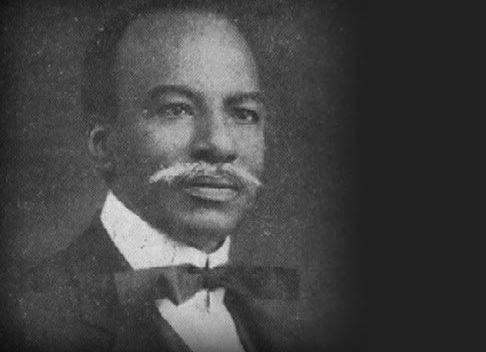
Herbert Macaulay was not of impeccable character according to
public records. He had the one key gene of a leader though, the ability
to glue different strata of society. Macaulay was born into the
prominent family of Thomas Babington Macaulay and Abigail Crowther- son
of Ajayi Crowther- famous Anglican bishop. Macaulay’s academic stint
abroad was funded by the colonial office, yet he grew to be a formidable
enemy to their course. Badmos Macaulay used his position as a socialite
to fight for the respect of the House of the Lagos Oba and the
independence of the country. His Nigerian National Democratic Party
(NNDP) won all available elective seats in three elections, despite
Macaulay being barred from contesting elections. He Created the National
Council of Nigeria and the Cameroons (NCNC) in 1944 with Nnamdi
Azikiwe- who later became the ceremonial president of the country.
Macaulay died two years later in 1946- 14 years before Nigeria’s
presidency.
2. Aminu Kano
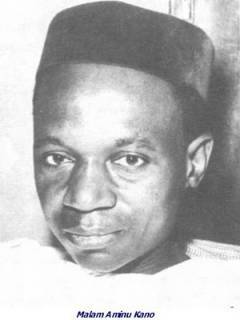
If there is any Northern/Muslim member of either the seventh or
eighth Senate that would have voted for the adoption of the United
Nations Convention against the Discrimination of women, it is Mallam
Aminu Kano. He was born in 1920 and died in 1983. Within the six decades
of his time on earth, Aminu Kano challenged the Northern Native
government- which was at that time dominated by people of Fulani
extraction. He canvassed for an egalitarian society and advocated for
the taxing of the rich. His support came from the commoners and petty
traders. Just like Macaulay, Aminu Kano was a bonding character. He was
one of the first generation of Nigerians to conceive of the creation of
politics without ethnic fault-lines. Aminu Kano served as Federal
Commissioner of Health under the Yakubu Gowon regime- 1967 to 1975. He
contested for the office of President under the Peoples Redemption Party
(PRP) in the 1979 poles.
3. Dangiwa Umar
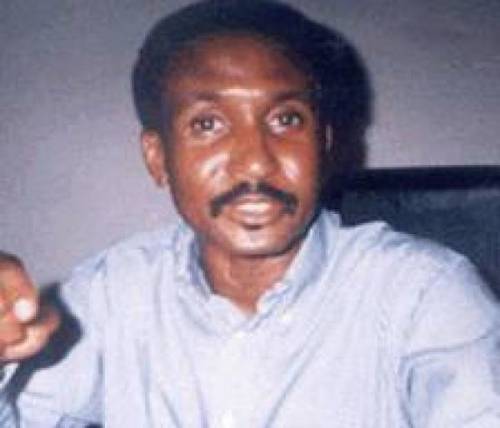
Umar is one of those rare beings that faced the cannon and took the
more difficult choice. He was born in 1949 and still lives. In 1993,
RTD Colonel Dangiwa Umar resigned he’s commission in the Nigerian
military, in an attempt to restore the mandate of MKO Abiola. He
searched for support to achieve his mission within the Nigerian army but
ultimately failed. That selfless effort got him detained on charges of
conspiracy in October of 1993 but he skidded out without a sentence.
Umar, who served as Governor of Kaduna state between 1985 and 1988, has
remained a social critique since the Fourth Republic. He famously
accused former president, Olusegun Obasanjo for being complicit in June
12, 1993 presidential election annulment. He is one of those who have
said the government should dialogue with the Boko Haram terrorists.
4. Ndubuisi Kanu
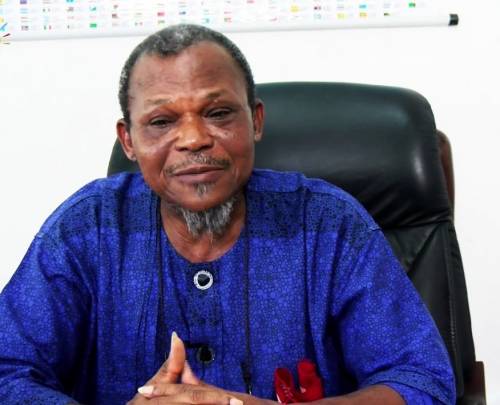
Just like Colonel Umar, Ndubuisi Kanu is one of those top military
officials who opposed the usurpation of power by Abacha in 1993. Kanu
was born in 1943 and still lives. Between 1976 and 1978, Rare Admiral
Kanu served as governor of Imo and Lagos States. He is an advocate for
the amendment of the Nigerian constitution to reflect a true federal
system of government. Kanu blamed the restiveness in the Niger Delta
region on the absence of regional governance.
5. Tai Solarin
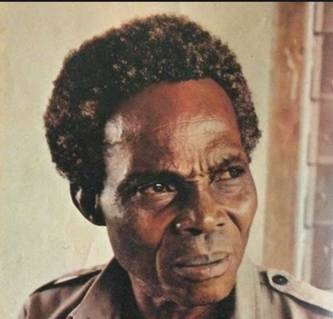
Solarin is one of those dogged beings that never veer off course in
their beliefs and struggles. Solarin, who was born in 1922 and died in
1994, was an educator and daring ink fighter. He was neither a
politician nor a member of the country’s security apparatus. Solarin’s
views would have seemed an anathema to many Nigerian voters, as he was
an atheist. This would have given the impartiality to deal with the
trappings of tradition and religion that have tethered the development
of the Nigerian state.
Solarin, a regular caller at Nigerian prisons, was famously
arrested this one time, for distributed a pamphlet titled the ‘beginning
of the end,’ to force Yakubu Gowon to hand over power to a civilian
regime in 1975.
6. Chima Ubani
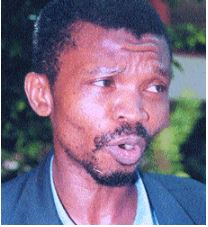
Like Taiwo Solarin, Chima Ubani was neither a politician nor member
of the military. Ubani, one of those hardened activists who did not
permit any government airs to go unvisited, was born in 1963 and died in
a car crash in 2005. Ubani created the Campaign for Democracy movement
in 1993 in response to the annulment of the elections by Ibrahim
Babangida. He became an Amnesty International prisoner of Conscience,
after his arrest by the Abacha regime in 1995. Ubani survived this
ordeal and resumed his normal routine when Obasanjo returned in 1999.
His greatest imprint is the halt on the indefinite detention of citizens
by security forces. Ubani was on a campaign against fuel price hikes
when his car somersaulted in what an investigation published in 2007
describes as suspicious.
7. Anthony Enahoro
.jpg)
Anthony Enahoro was the first individual to move for the
independence of Nigerian of the floor the parliament in 1953. His motion
did not receive support but led to a cascade of more motions which
forced the colonial clasps open. Enahoro was born in 1923 and died in
2010. At age 21, he is said to be the youngest editor of a Nigerian
newspaper- the Southern Defender in 1044. This fit was attained at a
time when the press was food for the independence struggle. More
remarkably, Enahoro was still a student in Kings College Lagos at the
time. Enahoro, a two-time minister, is one of those independence heroes
who never won an election when independence was attained. Ironically, he
served as a Minister under Yakubu Gowon’s military regime.
8. Michael Okpara
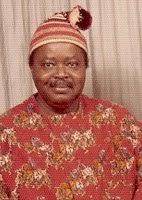
If Michael Okpara was alive to serve as President of the Federal
Republic of Nigeria, it is highly probable that his hands would never
have been found sticky with crumbs from the cookie jar. The medical
doctor
and agricultural reformist was born in 1920 and died in 1984.
Okpara is believed to have never owned a house of his own during his
time in different government positions- 1952 to 1966. Okpara is the only
of the three regional premiers- North, West and Eastern regions to have
survived the first military coo of 1966. He is famed for bringing
reforms to the Eastern region during his time as Premier. If Okpara was
president, he probably would not have permitted the abandonment of the
agricultural sector by the discovery of hydrocarbon. Ahead of his return
from exile in 1979, his associates raised a collection to build him a
house in his hometown in today’s Abia State.
9. Ernest Ikoli
It is an omission of history to speak of the struggle for
independence and not mention Ernest Ikoli. Ernest Ikoli was born in 1893
and died in 1960, the year when his life’s worth was achieved. Ikoli
was one of the founders of the Nigerian Youth Movement which wrestled
power with Macaulay’s NNDP in Lagos. Ikoli represented Lagos in the 1942
legislative council. Just like Macaulay, Obafemi Awolowo, Nnamdi
Azikiwe and most of the Nationalist fighters, Ernest Ikoli saw the media
is the best channel of communication with Nigeria’s colonial
oppressors. Ikoli started with being the first editor of the Daily
Times. He soon founded the African Messenger as well. Ikoli is an
insignia of those times when genuine leaders used the press in an
unbiased selfless course.
10. Isaac Boro
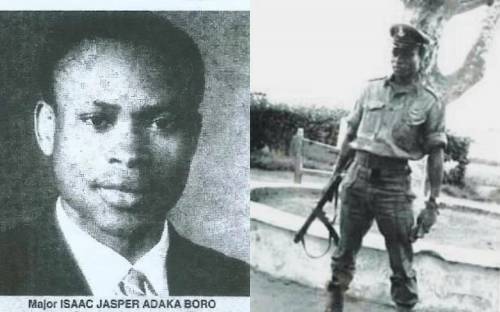
Isaac Boro is one being that divides perceptions across Ijaw and
Igbo fault lines. He was born in 1938 and died in 1968 during the civil
war. Boro was an undergraduate and student union president in the
University of Nigeria Nsukka, when he formed a militia group- the
Niger Delta Volunteer Force (NDVF). He declared the Niger Delta Republic
in February 1966 and engaged the Nigerian state in a 12-day armed
struggle. Boro and his militants were subdued and cut a deal with the
federal government before the civil war began- a deal that was vital to
the defeat of the Biafran army. He was an active soldier with the
Federal Republic of Nigeria before his ‘mysterious’ death. Boro’s grouse
still remains unsolved today. He fought against the exploitation of
petroleum resources from the Niger Delta to the detriment of the lands
been exploited. Boro is from Oloibiri, where the first commercial oil
well was drilled. The well has since dried up and the community is in
shambles.
11. Ahmadu Bello
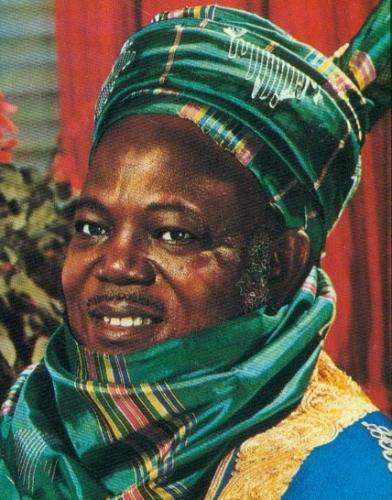
Ahmadu Bello was born into provision but understood how to use it.
Born in 1910, to the Uthman Danfodio lineage, He was killed in a coup in
1966, which triggered the slaughter of over 40,000 persons of Igbo
extraction.
Ahmadu Bello’s blueprint was to industrialize the Northern region
and keep them at par with the West and East. In order to keep this dream
alive, he relinquished his office as Prime Minister to Abubakar Tafawa
Balewa, then Deputy Leader of the Northern People’s Congress (NPC) in
1960. Bello tried to maintain the traditional Quranic schools by giving
them a modern education outlook. His dream was to have a quality school
in every Northern Province. His drive to have the North industrialized,
is summed up in his removal of persons of European and Southern
extraction from political offices in the North. If Ahmadu Bello saw
Nigeria and he saw the North and reigned as president, a legacy of
growth and prosperity would have been the probable outcome.
12. Obafemi Awolowo

The son of a farmer was a self-made man that rose to become a
respected leader of the Yoruba nation. Born in 1909, the legal luminary
stayed active in Nigerian politics till his death in 1987. As Premier of
the Western region, Awolowo aggressively promulgated a socialist policy
that saw the use of taxes and monies earned from cocoa production to
promote access to education within his province. That singular policy
created a generation of educated Yoruba elites. After his release from
prison- following the constitutional crisis of 1963, Awolowo played a
key role in managing the financial operation of the civil war-1967 to
1970 as well as the settlement of scores between former Biafrans whose
assets were confiscated and the Nigerian government. Obafemi Awolowo
made three unsuccessful attempts at becoming Nigeria’s president. With
his firm stance on federalism and strong financial acumen one of his
breed is conspicuously absent in today’s leadership of the country.
Those are the not so spotless Nigerians that might have left indelible positives on Nigeria’s governance.
***
Source: SaharaReporters


0 comments:
Post a Comment